



Pyruvate Kinase
Pyruvate kinase is an enzyme that catalyzes the conversion of phosphoenolpyruvate and ADP to pyruvate and ATP in glycolysis and plays a role in regulating cell metabolism. There are four mammalian pyruvate kinase isoforms with unique tissue expression patterns and regulatory properties. Pyruvate kinase has four different tissue-specific isozymes in animals, PKL, PKR, PKM1, and PKM2. The L and R isozymes are expressed in the liver (L) and red blood cells (R), whereas PKM2 is expressed in early embryonic cells and other proliferating cells, and PKM1 is expressed in the brain, skeletal muscle, and heart which need high energy.
PKM1 and PKM2 are formed by a single mRNA transcript of the PKM gene by alternative splicing. The oligomers of PKM2 exist in high activity tetramer and low activity dimer forms. The dimer PKM2 regulates the rate-limiting step of glycolysis that shifts the glucose metabolism from the normal respiratory chain to lactate production in tumor cells. Besides its role as a metabolic regulator, it also acts as a protein kinase, which contributes to tumorigenesis. PKM2 serves as a promising target for cancer treatment.
All Product Categories
-
Pyruvate Kinase Related Products (89)
Related Products (89)

-
Antibodies (6)
-
Mitapivat hydrochloride
 0 ImagesCat. No.: HY-12689CCAS No.: 2559738-69-9Synonyms: AG-348 hydrochlorideMitapivat (AG-348) hydrochloride is an orally active and selective allosteric pyruvate kinase R (PK-R) activator. Mitapivat hydrochloride accelerates the reaction of PK-R catalyzing the conversion of phosphoenolpyruvate to pyruvate, thereby promoting the glycolytic pathway, increasing the production of adenosine triphosphate (ATP) in red blood cells, and reducing the level of 2,3-diphosphoglycerate (2,3-DPG). Mitapivat hydrochloride is promising for research of pyruvate kinase deficiency and other anemia-related diseases.
-
PKCζ/ι pseudosubstrate inhibitor
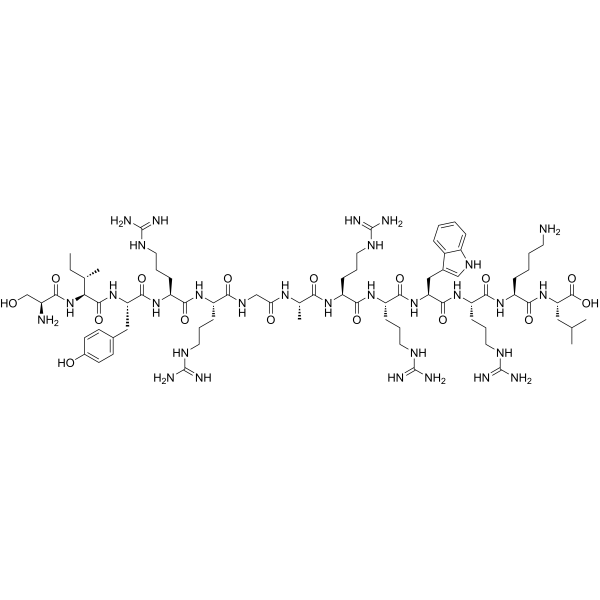 0 ImagesCat. No.: HY-P3201CAS No.: 799764-07-1PKCζ/ι pseudosubstrate inhibitor has broad-spectrum effects on the PKC enzyme family and can induce memory impairment.
-
Vitamin K5
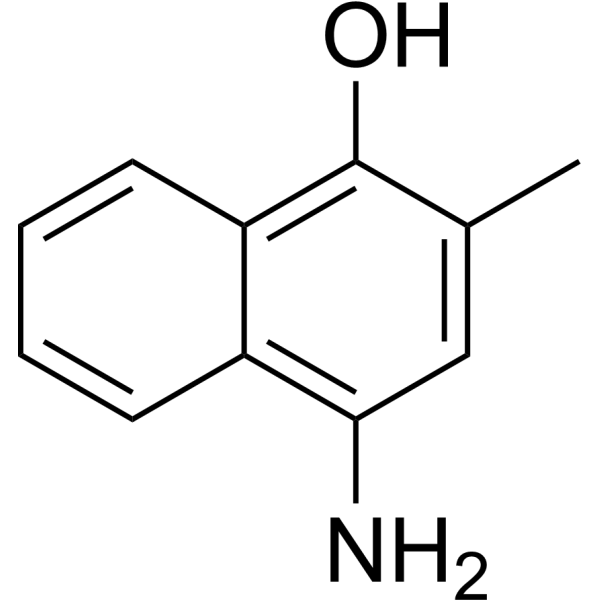 0 ImagesVitamin K5 (Synkamin) is a photosensitizer and a antimicrobial agent. Vitamin K5 is a specific PKM2 inhibitor with IC50 values of 28, 191 and 120 μM for PKM2, PKM1 and PKL. Vitamin K5 induces apoptosis of colon 26 cells. Vitamin K5 can be used for the research of infection and cancer, and it also can be used as a preservative for pharmaceuticals, foods, and beverages.
-
Multi-target kinase-IN-9
 0 ImagesCat. No.: HY-182037Multi-target kinase-IN-9 is a multi-target enzyme inhibitor with antiproliferative and antiangiogenic activities, and exhibits remarkable selectivity against hepatocellular carcinoma cells. By broadly binding to the active sites or ATP-binding regions of multiple key enzymes including DNA polymerase β, Pyruvate Kinase M2 (PKM2), Multi-target kinase-IN-9 comprehensively disrupts DNA repair and replication, glycolysis, chromatin dynamics and transcriptional programs, and blocks the self-renewal of cancer stem cells. Multi-target kinase-IN-9 induces genomic instability, lysosomal dysfunction and autophagic flux impairment, thereby triggering tumor cell death, effectively inhibiting tumor proliferation, invasion, metastasis and angiogenesis, and significantly reducing tumor volume in xenograft models. Multi-target kinase-IN-9 is applicable to hepatocellular carcinoma-related research.
-
PKM2-IN-4
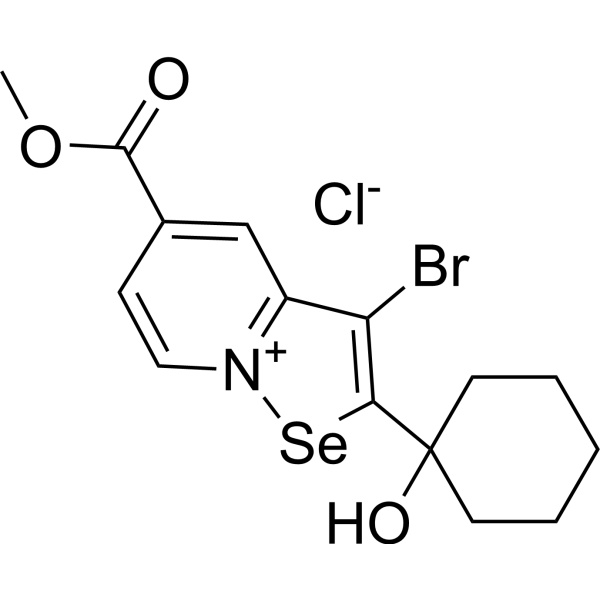 0 ImagesCat. No.: HY-155849CAS No.: 2996165-24-1Pkm2-in-4 (compound 5C) is a selective inhibitor of PKM2 (IC50=0.35 μM), which regulates pyruvate-dependent respiration and induces mitochondrial H202 production rate and electron transport system coupling.
-
PKM2-IN-9
 0 ImagesCat. No.: HY-169567CAS No.: 498568-75-5PKM2-IN-9 (compound C1) is a potent inhibitor of PKM2, with the inhibition rate of 75% at 50 μM. PKM2-IN-9 plays an important role in cancer research.
-
Benserazide-d3 hydrochloride
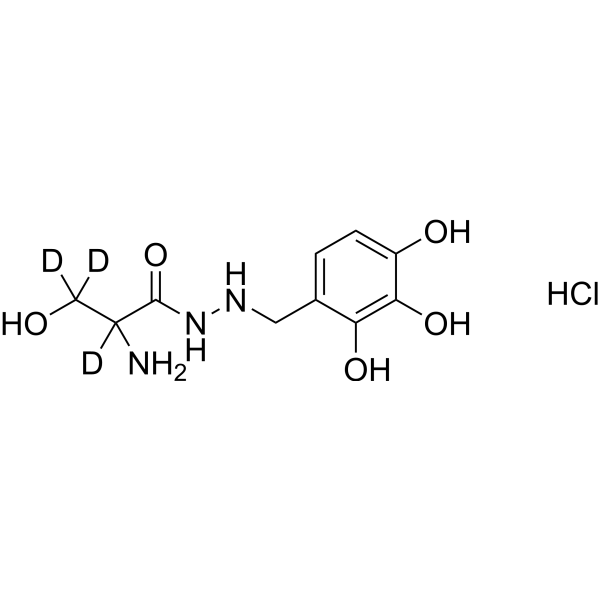 0 ImagesCat. No.: HY-B0404ASSynonyms: Ro 4-4602-d3 hydrochlorideBenserazide-d3 (hydrochloride) is the deuterium labeled Benserazide hydrochloride (HY-B0404A). Benserazide hydrochloride (Serazide) is an aromatic L-amino acid decarboxylase (AADC) and L-DOPA decarboxylase inhibitor. Benserazide hydrochloride is also a PKM2 inhibitor. Benserazide hydrochloride directly binds to and blocks PKM2 enzyme activity, leading to inhibition of aerobic glycolysis concurrent up-regulation of OXPHOS. Benserazide hydrochloride can be used for the study of Parkinson's disease and melanoma.
-
PKM2 activator 7
 0 ImagesCat. No.: HY-161519PKM2 activator 7 (Compd B4) is a PKM2 activator with the AC50 of 0.144 μM. PKM2 activator 7 suppresses DSS (HY-116282C)-induced colitis by inhibiting T cell growth in mouse colitis model.
-
PKM2 activator 3
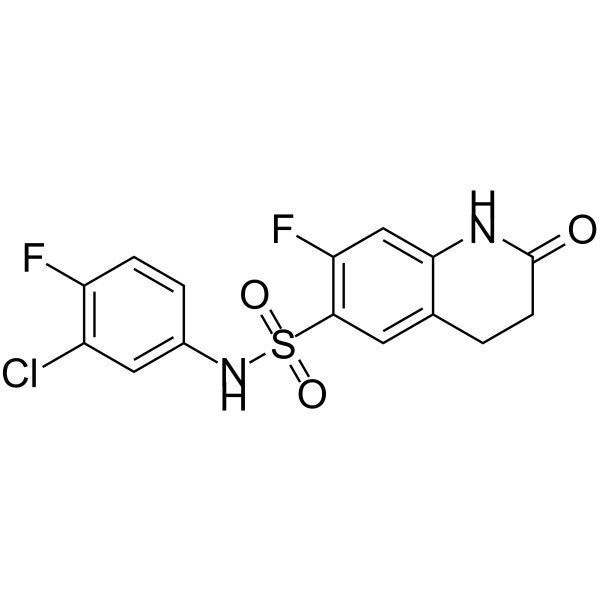 0 ImagesCat. No.: HY-147397CAS No.: 1346113-84-5PKM2 activator 3 is a potent PKM2 activator with an AC50 value of 90 nM. PKM2 activator 3 has good Caco-2 permeability, a low efflux ratio and high microsomal stability. PKM2 activator 3 can be used for researching anticancer.
(AC50: the concentration which gives 50% activation of enzyme.)
-
PKR activator 4
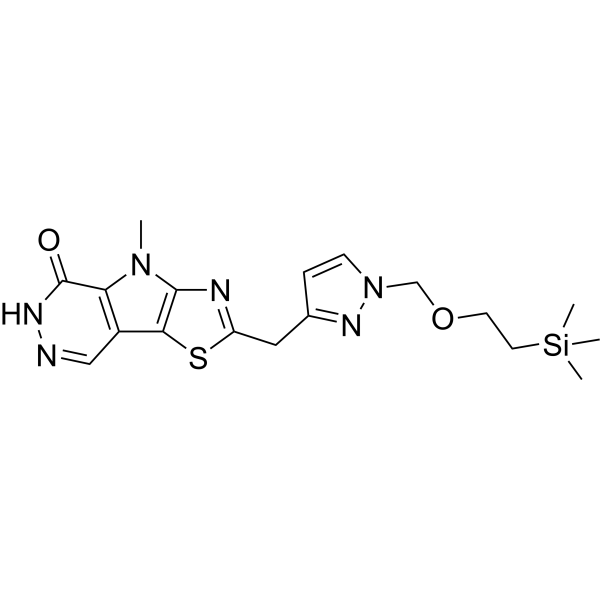 0 ImagesCat. No.: HY-153354CAS No.: 2283420-05-1PKR activator 4 (example 7A) is a potent pyruvate kinase R (PKR) activator. PKR activator 4 has the potential for the research of blood disorders.
-
PKM2 activator 11
 0 ImagesCat. No.: HY-180795PKM2 activator 11 (Compound 23) is a PKM2 activator with an AC50 value of 92.12 nM. PKM2 activator 11 promotes PKM2 tetramerization and inhibits its nuclear translocation. PKM2 activator 11 suppresses glycolysis and the PKM2/STAT3 signaling pathway. PKM2 activator 11 induces Apoptosis. PKM2 activator 11 exhibits anti-CRC activity in vitro with potency and selectivity.
-
LZ1 peptide
 0 ImagesCat. No.: HY-P10338CAS No.: 1423743-97-8LZ1 peptide acts as a Pyruvate kinase inhibitor, antimicrobial agent, and antimalarial agent. LZ1 peptide reduces ATP production and inhibits the malaria parasite Plasmodium falciparum. LZ1 peptide exhibits activity against Plasmodium berghei in mice and reduces parasitemia. LZ1 peptide shows favorable antimicrobial activity against pathogens associated with acne vulgaris. LZ1 peptide possesses anti-inflammatory effects. LZ1 peptide can be used in malaria-related research.
-
Alkannin
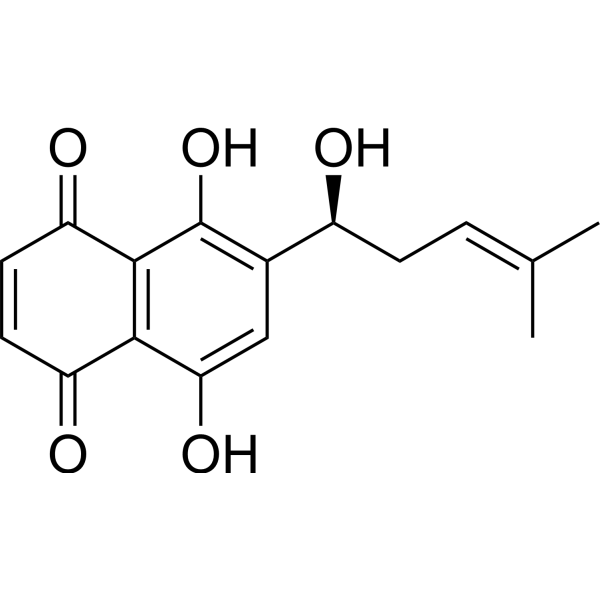 0 ImagesCat. No.: HY-119874CAS No.: 23444-65-7Alkannin is a potent and specific inhibitor of tumor-specific pyruvate kinase-M2 (PKM2). Alkannin does not inhibit PKM1 and pyruvate kinase-L (PKL). Alkannin acts as a potential anticancer agent.
-
PKM2/PDK1-IN-1
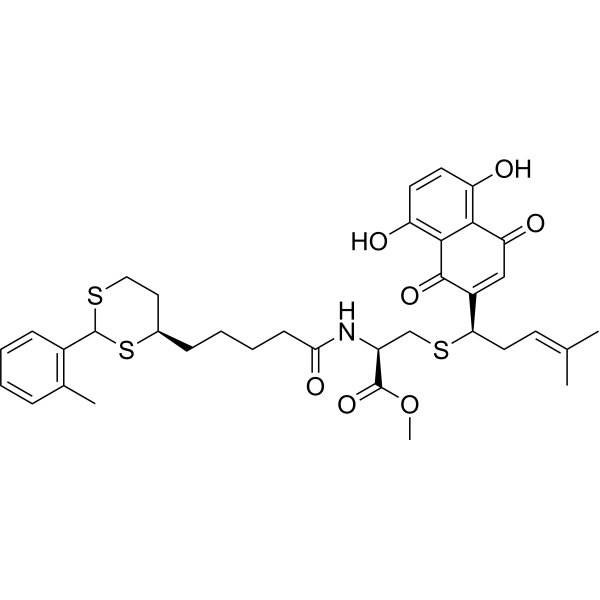 0 ImagesCat. No.: HY-149275CAS No.: 3041957-90-5PKM2/PDK1-IN-1, one of shikonin thioether derivatives, is a dual inhibitor of PKM2/PDK1. PKM2/PDK1-IN-1 inhibits the proliferation of NSCLC cells, and induces apoptosis. PKM2/PDK1-IN-1 induces intercellular ROS production, and regulates the apoptotic proteins, to involves in mitochondrial and death receptor pathway.
-
ML 083
 0 ImagesCat. No.: HY-111936CAS No.: 562867-96-3Synonyms: BML283ML083 is a member of a series of highly specific allosteric activators for the tumor-specific isoform of human pyruvate kinase (M2 isoform). ML083 affects the cooperativity of phosphoenolpyruvate (PEP) binding. ML083 can be used in the research of tumors.

-
PKR-IN-1
 0 ImagesCat. No.: HY-168446CAS No.: 3057531-75-3PKR-IN-1 (Compound 5s) is a pyruvate kinase (PK) inhibitor that has antifungal activity, with an EC50 of 0.21 μg/mL for R. solani.
-
PKM2 agonist-1
 0 ImagesCat. No.: HY-180796CAS No.: 3075162-42-1PKM2 agonist-1 (Compound D16) is a highly effective, allosteric PKM2 agonist with an AC50 value of 77 nM. PKM2 agonist-1 inhibits Ang II-induced smooth muscle cell phenotypic switching. PKM2 agonist-1 effectively prevents aortic dissection and results in reduced mortality.
-
Vitamin K5 hydrochloride (Standard)
 0 ImagesVitamin K5 (hydrochloride) (Standard) is the analytical standard of Vitamin K5 (hydrochloride). This product is intended for research and analytical applications. Vitamin K5 hydrochloride is a photosensitizer and a antimicrobial agent. Vitamin K5 hydrochloride is a specific PKM2 inhibitor with IC50 values of 28, 191 and 120 μM for PKM2, PKM1 and PKL. Vitamin K5 hydrochloride induces apoptosis of colon 26 cells. Vitamin K5 hydrochloride can be used for the research of infection and cancer, and it also can be used as a preservative for pharmaceuticals, foods, and beverages[1][2][3].
-
PKM2-IN-5
 0 ImagesCat. No.: HY-162071CAS No.: 904457-46-1PKM2-IN-5 (Compound G1) is an inhibitor for pyruvate kinase M2 (PKM2), with IC50 >70 μM.




